Showing posts with label miroslav volf. Show all posts

Wednesday, March 28, 2012

Miroslav Volf on Nietzsche's "Superhuman Forgiveness"

Having recently relayed some different "takes" on forgiveness I thought I'd return to the theme today with another. In the literature regarding the practice of forgiveness it is often described as an internal switch of mind in which the person is able to "let go" of or "rise above" an offence, experiencing personal therapy and opening up a social high road (which may or may not be travelled by the other party involved). Sometimes Christians will advocate such internalized forgiveness by saying that the forgiver is to act "as if" the offence had not occurred. This may have some credence on some levels, but seems an inadequate account of forgiveness, as is illustrated in the following assessment of Nietzsche, given by Miroslav Volf:

 "In The Genealogy of Morals Friedrich Nietzsche advocated a version of 'as-if-not' attitude toward transgression .... an attitude toward transgression untouched by concerns for justice as desert. He writes:

Friedrich Nietzche
'To be unable to take his enemies, his misfortunes and even his misdeeds seriously for long--that is the sign of strong, rounded natures with superabundance of a power which is flexible, formative, healing and can make one forget.... A man like this shakes from him, with one shrug, many worms which would have burrowed into another man; here and here alone is it possible, assuming that this is possible at all on earth--truly to 'love your neighbour.''

Such sovereign disregard for injuries from others demands extraordinary strength, almost that of an übermensch [superman].... [However], his example of the 'virtuous' [man] could not forgive because he had forgotten!... Nietzsche had little positive to say about [forgiveness] and tended to replace it with 'forgetting.'"

To my mind this seems largely inadequate for another reason, which is that it expects superhuman strength precisely from the one who has been victimized. Add it up and Nietzsche's sort of forgiveness is more like an argument for the politics of disregard, supporting the sequestering of power by those who are able to transcend their situation and carry on in the repression of others undaunted. In other words, it is the stuff of violence, and not of grace. We should watch that our Christian accounts of forgiveness do not take this form.

- See Miroslav Volf, "Forgiveness, Reconciliation, and Justice," 
in Forgiveness and Reconciliation (Templeton, 2001), p. 36-38, and 
Nietzche, On the Geneology of Morals (Cambridge, 1994), p. 23-24

Friday, May 06, 2011

"The Fullness of Christ's Mercy"

I found it hard to know what to think about the death of bin Laden. Couldn't pretend to be happy with all the ways Christians were throwing around the word justice as if that was all there was to it. Had to admit it was pretty easy to peer in from the outside and be altruistic about what should or should not be said. There are probably many editorials one could link to and you've probably read them yourself. As it is I think the best I can do is place a link into my archives that points to a reflection of a 9/11 survivor that is simple, raw, and poignant. Find an excerpt at Experimental Theology: "The Fullness of Christ's Mercy".

Interestingly enough, the post concludes with a postcript saying that "one of the best theological meditations on Christian forgiveness and the memory of wrongdoings" is Miroslav Volf's The End of Memory. I have a paper in the Oxford Research Archive which agrees somewhat but begs to differ in some important ways. Since I'm studying this right now I thought I'd mention that while Volf's End of Memory is a good evocative book on the subject, one would be better to read his Exclusion and Embrace, or Gregory Jones Embodying Forgiveness. There should be a dissertation on Karl Barth's theology of forgiveness coming out in a while too. ; )

Monday, April 18, 2011

Recently "Published"

An essay I gave at an Oxford Postgraduate Conference last fall has now been published online as part of an e-book of sorts at the Oxford Research Archive. My friend Martin's essay is chapter seven, and mine is chapter eight, called "Once for All and New Every Morning: Forgiveness in the Theology of Miroslav Volf and Karl Barth." If you follow the link you can download it from the sidebar on the right. Since Volf got me into reconciliation theology and Barth has kind of taken over, this essay tracks a bit of that journey and shows me wrestling with some of the finer issues involved as they relate to the conference theme, which was "The Present Moment".

I continue to welcome your thoughts on the Rob Bell review. If anyone would like an unofficial but reformatted and slightly more succinct version in a Word document, drop me an email at coutts dot jon at gmail dot com, as I do have one available. I also would be willing to present these thoughts more formally or lead discussion on these matters in the Canadian C&MA context in the coming year.

Thursday, December 30, 2010

Top 35 Non-Fiction

Every year around my birthday I try to get a new "all time" list up on my blog, for the sake of both recollection and recommendation. What began as a thank you email to 31 people who had had a profound impact on my life followed up with blog-lists of "32 films that stuck", "33 favourite fiction", and "34 albums I've lived by" -- all found on my sidebar and added to each year. This year I offer my top 35 non-fiction reads of all time. A bit of an eclectic (and ecclesiological) list, but it is my list nonetheless. 'Tis the season.

1. Karl Barth - Church Dogmatics IV: The Doctrine of Reconciliation

The four part-volumes and posthumously published fragments of what ended up being the climactic finale to Barth's theological career have for me been the clearest and most compelling articulation not only of Protestant Christianity but of life on this earth. Not a few times this year I've been heard to say (somewhat facetiously) that I think I became a Christian reading the Church Dogmatics.
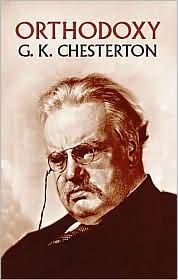
2. G.K. Chesterton - Orthodoxy

An autobiographical account of Chesterton's coming to faith at the turn of last century, Orthodoxy transcends memoir and offers a wonderful view of the Christian spirit amongst the modern myths. The humility and humour that GKC brings to the reasonable defense of the orthodox Christian faith is to me the embodiment of speaking the truth in love. The content of the book is refreshing and true to life; inspiring and provocative of further thought.

3. Henri Nouwen - In the Name of Jesus: Reflections on Christian Leadership

At a conference one year I retreated to my room for the afternoon, opened this book, read it, wept, phoned my brother, hung up, turned to the beginning and read it all over again. This book transformed my perspective on Christian leadership and community. When people ask me for my top five leadership books I just tell them to read this one and quit wasting their time.

4. Miroslav Volf - Exclusion and Embrace: Theological Exploration of Identity, Otherness and Reconciliation

Maybe the best practical account of the gospel that I've read. Among other things in this book Volf recommends "the epistemological side of faith in the Crucified," a posture of dialogue which does not amount to the forsaking of one’s convictions, but the openness to the ever-present possibility of having one’s perceptions enhanced by others, especially those with which one essentially disagrees. Calling it "enlarged thinking," Volf explains that this is not a rhetorical strategy, but is simply what true followers of Christ do.

5. Stanley Hauerwas & William Willimon - Resident Aliens: Life in the Christian Colony

I must have turned to this book every couple weeks when I was a pastor, and it really impacted my approach. Though the subtitle -- "a provocative Christian assessment of culture and ministry for people who know something is wrong" -- is what grabbed me first, it was the constructive content that stuck with me most. I am still grappling with Hauerwas and Willimon's description of the church as first of all a confessing people.
6. Francis Schaeffer - True Spirituality

I had a pretty narrow view of what the cross of Christ meant for person, church and world until I picked this up and devoured it somewhere in the gap between my first and second years of Bible College. It dealt with what Schaeffer called the "substantial" ramifications of the gospel, but didn't sell them as guarantees or self-help mechanisms. What he showed was the social and personal trajectory of the gospel.

7. Stanley Grenz & John Franke - Beyond Foundationalism: Shaping Theology in a Postmodern Context

Having been tempted to rely on and form intellectual foundations for my faith and to work up apologetic arguments for them, I was impacted by this book to consider other ways that theology might and ought to be done. Not only did it give voice to and address intelligently many of the doubts and suspicions that have arisen in the contemporary era, it also went on from there to point out the Trinitarian structure, Community-integration, and eschatological orientation of Christian theology.

8. Mary Stewart Van Leeuwen - Gender and Grace: Love, Work & Parenting in a Changing World

Though I had done a good deal of exegetical and theological work on the issue of gender roles and the Bible, I still had trouble understanding past contexts and picturing the way mutuality-based relationships, churches and societies might look today. This sociological account dovetailed explicitly with that study to clarify the paradigm for me in the way no other book ever has. I went through it with my wife and we took it as a role model for the type of couple we wanted to be and the type of community we wanted to be a part of promoting in this broken world. A brilliant, informative, and important read for any Christian trying to be true to the biblical vision in our time.

9. N.T. Wright - Jesus and the Victory of God

At a time when scholars of every stripe were questioning and reframing historical Jesus studies, N.T. Wright gave a historical-exegetical account of the life and passion of Jesus that credibly and compellingly highlighted the radical relevance of this first century Jew and opened up a floodgate of fresh insights into the import of the Christian gospel. Before reading this I had been hesitant to preach the gospels and leant more toward the epistles and Old Testament narratives, but Wright brought the gospels to life and showed to me both their accessibility and profundity.

10. Romeo Dallaire - Shake Hands With the Devil: The Failure of Humanity in Rwanda

A devastating memoir of an incredible experience in this man's life. He was the leader of United Nations peacekeepers in Rwanda before and during the 1994 genocide who was handcuffed by the world's lack of support for the mission there. He witnessed not only the atrocities of tribal warfare but of political malaise. Dallaire's conclusion? What we most desperately need is a "transfusion of humanity." I won't say I enjoyed this book, but I couldn't put it down -- and it gave some complexity to my fairly simplistic pacifism.

11. Karl Barth - Church Dogmatics II: The Doctrine of God

Reading the Doctrine of Election early every Friday morning for two years over a Starbucks with a half dozen seminarians was certainly a highlight of my education and an eminently formative experience. Though I fought him on the doctrine of election at every step, Barth's resistence to common categories and his insistence on speaking about Jesus first ended up being not only convincing but contagious. Going back and reading the first part-volume on the perfections of God now is only solidifying the importance of this book to my whole outlook.

12. G.K. Chesterton - The Everlasting Man

Though dense at points, at other points the prose is just marvelous. Likely Chesterton's best work of theology. I'm not sure if I still agree with it as much as I used to (particularly as it concerns its natural theology), but I certainly find in it an irresistible account of how it is that Jesus Christ is the alpha and omega, the man for all humanity, the one creation longed for -- and longs for still.

13. Donald Miller - Searching for God Knows What

An engaging and personable working out of the Christian faith by a guy my age with some of the same hang-ups. Written in a conversational style it brought some new vitality not only to the mundane things of life but to some of its deepest convictions. Has an honesty that is well taken and infectious.

14. John Ortberg - Everybody's Normal Till You Get to Know Them

An excellent and easy-to-read application of Matthew 18. An absolute must for people trying to lead a community of any kind, let alone a Christian community -- which has the motor for the kind of reconciliation work that that chapter describes. Entering the pastorate with a bachelor's degree, I still didn't know what to do with broken relationships in the community. This got me on the road to those practicalities, and many books later, now to a new ecclesiology.

15. Sidney Lumet - Making Movies

An acclaimed director describes the technicalities and personalities of film-making, with some incredible insights into the dynamics of respecting individuality and working together for common goals. A lot of leadership books derive their "principles" from the business or the sporting world, often to ill effect, and I found some balance and profundity in this perspective from the world of the arts.

16. John Stackhouse - Finally Feminist: A Pragmatic Christian Understanding of Gender

An excellent assessment and explanation of the gender-roles issue in churches today. It explains the biblical material in a way that refuses to assume that one side or the other is simply out of touch or unintelligent or unbiblical, manages to articulate a paradigm for understanding the whole, and offers a way forward with debate and change under the rubric of the law of love.

17. C.S. Lewis - Mere Christianity

I've since gone back to the book with a bit more of a level head, but when I first finished Mere Christianity I told my family that it really ought to be the 67th book of the Bible. Now that I mark book reviews of it for a distance learning class I've come to see its many flaws. But I can't deny what it did for me at one time, nor am I unmindful of the many wonderful gems inside.

18. Joseph Heath and Andrew Potter: The Rebel Sell: Why the Culture Can't Be Jammed

This book is a breath of fresh air for those disillusioned with culture but also unsatisfied with reactionary (and problematic) counter-cultures. The authors give some great perspective to the whole trend of "culture-jamming" and unveil it as the same culture as the one before with little more than a different product to sell. More to the point, what the "culture-jammers" are selling is the product of "difference". In fact, the authors show that the desire to be different is what makes our capitalist culture succeed, which is ironic since this is the very culture the culture-jammers claim to want to undermine.
19. Joseph Pearce - Wisdom and Innocence: A Life of G.K. Chesterton

A thoroughly enjoyable picture of a very unique character whose genius and eccentricity can often overshadow the truly inspiring humility and joy at the core of his being. He seems like he's a guy everyone would be better off for having known. Since we can't go back to the 30s, I highly recommend curling up on a couch and getting to know him through the pages of this book.

20. Philip Yancey - Rumours of Another World: What on Earth are We Missing?

This book spoke to a variety of things, from faith to sex, and just kept pointing to the guiding sense of wonder within it all.

21. Anthony Campolo - Partly Right (We Have Met the Enemy and They Are)

At the time someone described Campolo as a "sweaty-toothed youth speaker." He's intense, and to be honest I was surprised to be reading a book by him for a philosophy class. But he really hit me where I needed it to hurt with this one. "All truth is God's truth," they say, and sometimes the truth the Church most needs to hear may come not from within but from without. If all we ever read is what flies off the Christian book store shelves we may only ever read what we want to hear. Campolo does a great job gleaning great (and biblical) stuff from some generally disregarded sources, and this book is a good read in humility, truth, and listening skills.

22. Annie Dillard - Pilgrim at Tinker Creek

I heard that Annie Dillard's writing philosophy is not to use a single word unless it achieves a specific purpose. I believe it. She just quite simply has a way with words. Every single one is packed with a punch of life and majesty. In this book she can take an ordinary thing such as a leaf or an cloudy day or a trail of insects on the curbside at a rundown gas station and pull out of it more frightful beauty and terrible glory than we ever realized was there. Stuff we drive by every day is for Dillard the key to the universe, and reading this book alone can exponentially increase your awe and gratitude. Reading this book was the first time I remember enjoying reading for the plain sake of the reading itself.

23. Pumla Gobodo-Madikizela - A Human Being Died that Night

A psychologist in post-Apartheid South Africa personally interviews one of the most atrocious perpetrators of apartheid's many crimes, and wrestles with the realization of his humanity. Prime evil can be condemned, but not written off as something to which we innocent victims are immune. A sad and profoundly moving read.

24. Philip Yancey - Soul Survivor

A series of chapters on influential authors and thinkers, from Martin Luther King to Fyodor Dostoevsky. Many of the books I've mentioned on this list I read because of Yancey. He opened up several new vistas for me, some I have yet to fully explore.


25. Tricia McCary Rhodes - Contemplating the Cross

A 40 day meditation on the passion week leading up to Easter, this book helped me learn to meditate and more importantly to plumb the depths of the death of the Son of God.


26. John Webster - Word and Church

Some of the clearest articulations I've ever read about what is the church and what it means that God with us speaks among us.


27. Augustine - Confessions

A masterpiece which is best read as doxology first, theology second, and autobiography third. However, the three are obviously and importantly intertwined.


28. Bernd Wannenwetsch - Political Worship

This book bogged down in the middle but I thought that the path laid out in the beginning and the ideals put forward toward the end were some of the most refreshing and appropriate ecclesiology I've read. The chapter on "Consensus and Forgiveness" offers a much needed word for churches obsessed with efficiency and success that they forget their call to the ministry of reconciliation.


29. Elie Wiesel - Night

30. Simon Wiesenthal - The Sunflower

Holocaust reflections that are as pointed and poignant as they are haunting.


31. Rob Bell - Velvet Elvis

It may have been the tone more than the content that caught me up in this one. I had some problems with the book, but was pretty on board with the trajectory. In seminary I did extensive research on Rob Bell's hermeneutic, and so this book and the ensuing study left its trail in my thinking.


32. Clark Pinnock - Most Moved Mover

Many people I respect (and some I don't respect) have long since written off openness theology. I continue to be more intrigued than I am unconvinced, and will usually be the first to defend the view, even while I tweak it accordingly. All that to say, I was deeply invigorated by what Pinnock put forward here, and have yet to put this issue to bed.

33. Andrew Purves - Reconstructing Pastoral Theology

I said before that I'd tell pastors browsing leadership books to read Nouwen's In the Name of Jesus and then not waste their time on anything else. I forgot to mention this one. I can't wait to read Purves' latest book, because this one cleared the ground excellently for a much-needed, well, reconstruction in pastoral theology.

34. Ravi Zacharias - Cries of the Heart

Though I've not had a lot of tragedy or suffering in my life, theodicy questions have always been front and center on my mind. I appreciate that Ravi Zacharias got me thinking about this early, and got me thinking (and feeling) pretty clearly too.


35. Robert Louis Wilken - The Spirit of Early Christian Thought

A highly readable and inspiring introduction to the theology of the first few centuries of the church. Instilled in me a hunger to read more of the patristics and to trace more avidly the continuities of Christianity.

Tuesday, August 31, 2010

This Present Forgiveness

The paper I'm scrambling to finish up today has been a long time in the writing. Though only 3000 words, it has been one of the more difficult papers I have ever written. I started by noting a certain difference between two theologians and suspecting it had significant ramifications and then I had to try to figure out what those were. At some point maybe for the first time in my life I began to feel like I was trying to think my own new thoughts (based on what others had taught me of course) rather than merely put in a new way what others had already said. That may not turn out to be the case, but the point is that I've really struggled to sort this one out. The weird thing is that once I finally felt like I'd formulated a kind of answer, I had forgotten what the question was. Thus in the last month I have written the introduction like a dozen times.

Anyway, I need to finish it today, so here is that introduction in what I hope is its final state. Incidentally, the conference theme is "The Present Moment" and the paper is called "Once for All and New Every Morning: Forgiveness in the Theology of Miroslav Volf and Karl Barth".


"Christians tend to be quite clear about the Father’s once-and-for-all forgiveness in Jesus’ name, but less so about whether or how it is articulated and applied as an ongoing event. There may be fresh requests for forgiveness, but these are the crisis moments and not the norm; the interruptions of a Christian life which is characterized more by other things. Where forgiveness is asked for repeatedly, it is doubtful whether many Christians believe God needs to actually re-forgive. Confession may then be more therapy than invocation—forgiveness being construed as a divine act of the past which clears the ground for a redemptive future but is related to the present by other means.

When applied on the day to day level of interpersonal relationships, then, what it means to forgive can also be quite ambiguous. No wonder that it frequently becomes a therapeutically decisive deference to the cross that justifiably renders the past passed and diffuses conflict or distances from pain, but goes no further. In light of the teachings of Jesus in places such as the Lord’s Prayer in Matthew 6, the parable of the unmerciful servant in Matthew 18, or the post-resurrection charge to the disciples in John 20 and its reverberations in Ephesians 4 and 1 John 4, it must be asked whether forgiveness might have more of an abiding part in the Christian life.

This question surfaces and clarifies quite illustratively in a comparative analysis of the theologies of Miroslav Volf and Karl Barth. Taking its cues especially from Volf ’s influential Exclusion and Embrace and his more recent The End of Memory and Barth’s turn to The Doctrine of Reconciliation in volume four of his Church Dogmatics, this paper seeks to explore divine forgiveness as a once-for-all event which is also new every morning in the lives of Jesus’ disciples and the perpetuation of Christian community.

While neither focuses on either divine or human agency to the express exclusion of the other, with Volf’s emphasis on human agency one sees forgiveness as an ongoing reinterpretation of the past in the present that does not deny sin but in light of Christ’s death and resurrection remembers it negated and overcome. This is both complimented and challenged by Barth’s insistent depiction of Christian forgiveness as inseparably embedded in the whole scope of Christ’s reconciling activity which is both an event and a history still underway. With Barth’s emphasis on divine agency one sees that, considered along with not only the crucifixion but also the resurrection of Christ, divine forgiveness is once-for-all not merely in the sense that it was accomplished in a particular historical event preceding our time but in the sense that the event itself envelopes our time—ever present to it and perpetually invoked from within it."

I am writing this with the intention of seeking publication for it elsewhere, so I won't post the entirety of it here, but if you would like to read it drop me a line and I'll email it your way. I will be thinking about this for quite some time and would love to hear your thoughts.

Friday, June 20, 2008

An Actual Review of Viva la Vida

I have to admit I'm a little tired of the title track from Viva la Vida already, but the rest of this album has me in its grip, that's for sure. The opening track is pregnant with expectation as it builds one of the snappiest instrumentals I've heard in a long time. The second song makes me feel like maybe its a walk in London, and I like that very much.

The third track, Lost, is like the theme song of the album, and you can see Chris Martin talk about it on The Hour here. (Incidentally, if you follow that link you'll also see him make a short comment about every track on their first two albums as well as a really funny line which reveals something about his own nerves and honesty about putting his music out there).

42 is probably my favourite right now. There is so much going on in this one. It also convinces you that they were serious about letting the guitar take the lead this time. Lovers in Japan/Reign of Love is a great slow down leading up to the "singles", of which Violet Hill is currently most captivating to me. Viva la Vida is an awfully religious-sounding song. Since I don't listen to "worship" music, I enjoy it when artful bands touch a spiritual nerve for me. Strawberry Swing is a sweet change of pace. It is like a lilting summer day.

The final track is Death and All His Friends, and I think the anthem on here is really inspiring, actually. Maybe I've been reading too much Miroslav Volf, but something about these lines captures the longing for redemption that I find so compelling. This probably drives musicians nuts, I don't know, but I quoted them in my sermon in chapel on Thursday. Here are those lines:

No I don't want a battle from beginning to end
I don't want a cycle of recycled revenge
I don't want to follow Death and all his friends

Wednesday, March 19, 2008

The Epistemological Side of Faith in the Crucified

"He who answers before listening---that is his folly and his shame." Proverbs 18:13

"The first to present his case seems right, till another comes forward and questions him." Proverbs 18:17

Yesterday morning in my Proverbs reading group we were noticing the tension between these and other proverbs which remind us of the value of listening and also the value of questioning. It was a timely discussion considering some of the stuff I've been learning and writing about lately, as follows:

"Chesterton rejected the false dilemma between tolerance and truth and sought to bring them together by debating honestly and humbly. Thus, he paradoxically tried to practice irenics and polemics at the same time. His commitment to common ground and his conviction about the existence of truth led him to make every effort to reconcile opposing views, not by feigning full agreement but by holding them together—discerning what aspects of each to deconstruct and what in the preceding view to reconstruct in order to bear fuller witness to all the partial truths represented.

Though a certain perspective (or faith) could still take the lead in one’s life and lay claim to one’s allegiance, it was never the case that one could say they had arrived at a complete understanding of it that would not benefit from dialogue and even debate. The goal of debate was to win, but winning ideally meant not the creation of a loser but a win-win scenario where both parties were better off. The more truthful view should prevail and bring those opposed over to its side. Thus the paradox of the "irenic polemic," and those who practice it are likely displaying more faith in truth to have its day than those who are more forceful and violent with their rhetoric.

Miroslav Volf has expounded the merits of such an approach as "the epistemological side of faith in the Crucified," an example of God’s self-giving love at work in those who dialogue with others about matters of truth. Such a thing does not amount to the forsaking of one’s convictions, but the openness to the ever-present possibility of having one’s perceptions enhanced by others, especially those with which one essentially disagrees.

This has been called "enlarged thinking," which is described by Volf in the words of Seyla Benhabib as "the processional generation of reasonable agreement about moral principles via an open-ended moral conversation." Volf explains that this is not a rhetorical strategy, but is simply what true followers of Christ do."

(See Miroslav Volf, Exclusion and Embrace: A Theological Exploration of Identity, Otherness, and Reconciliation (Nashville, TN: Abingdon Press, 1996), 214, 212. )

Wednesday, November 14, 2007

Facing the Complexity of Justice and Evil (a book review)

Pumla Gobodo-Madikizela’s A Human Being Died That Night offers a needed jolt of reality regarding the systemic and endemic extent of evil in our world. It does so by taking a hard look at one of the front-line perpetrators of apartheid: Eugene de Kock. The book poses questions about justice by reflecting honestly on the fact that he has been dubbed "Prime Evil" and sentenced to 212 years in prison by the very same society that created him, benefitted from his crimes, and endorsed them with their silence (34, 110-111). Though de Kock was rightly convicted of his crimes, once the structures of evil in which he was entangled are considered, it is clear that the punishment can not be called totally just. Justice has been served, but not really done.

At one level it must be affirmed that "de Kock’s harsh punishment is unques-tionably just because corporate or systemic structures of evil cannot be allowed to overshadow [his] moral responsibility to resist those structural evils" (Guretzki). It must be agreed that individuals can and should be held responsible for their actions even if they are going along with structural evil. The careful and serious discipline of individual offenders is justified by the essential need to uphold the freedom, dignity, and moral responsibility of the persons that make up a society. De Kock is accountable for his actions. He engineered countless murders rather than stand up for what was right. He knew those at the other end of the rifle were "people" just like him (76).

When he later insisted that putting politicians in his place would result in no more wars (78), de Kock indicted himself. After all, he was in that position and yet still perpetuated the evil. In one sense he may have been like a frog slowly boiling in a kettle, but he is not a frog. Being human means being held morally responsible or it ceases to mean very much at all. The proper length of de Kock’s sentence could be debated, but in an imperfect world it is preferable that individuals be held responsible than their personal responsibility be allowed to fragment into society and be diluted (162). Admitting that there are societal evils underlying his wrongdoings does not relieve his moral culpability—it reveals that there is plenty more moral culpability to go around.

Though de Kock’s individual culpability should not be overshadowed by societal evil, it should not be assumed that his punishment entails the unquestionable accomplishment of justice. Indeed, plenty of questions remain. Can his punishment return his victims to their families? Who can grant de Kock’s children a father in place of the one they lost to the system of apartheid? Why should de Kock’s children pay for this societal evil, and their fellow white school-children not? As Miroslav Volf concludes: "Justice is impossible in the order of calculating, equalizing, legalizing, and universalizing actions" (Volf, 223). God grants authority to human governments not under the delusion that they will finally and fully accomplish justice, but as part of his general grace by which justice can partially be served (Rom 13:1-5) this side of the new creation.

The complexity of evil begs many questions: How can justice be served on societies? Is it enough that taxes paid for de Kock’s hearings and for the Truth and Reconciliation Commission? How can justice ever be properly doled out to everyone who has a hand in society’s depravity? What about past generations? Would we be happier if we could raise Cain and crucify him for our sins?

Though her approach is strictly social and psychological, there is a theological depth to Gobodo-Madikizela's conclusions. In her longing for real justice she felt the deep need for "a sacrificial act" (113), for mercy "granted cautiously" to the repentant, and for a newfound "shared humanity" (139). It is hard to imagine any hope for final justice other than in a holy Human who suffers a sacrificial death, raises to life, empowers a reconciling people, and promises a final judgment day.

Friday, August 31, 2007

2007 Book of the Year: Exclusion and Embrace

This may seem a tad premature, but I am confident that I have just read, and can therefore name, my "Book of the Year". Last year I chose "Beyond Foundationalism" by Grenz and Franke. I'm pretty sure it didn't give the same sales bump as Oprah might have but, nonetheless, it seemed to me a very important book, and such a thing deserved to be said. Such a thing deserves to be said again.

Miroslav Volf's Exclusion and Embrace is perhaps the most important book of our day. I'm not kidding. Now, granted, it is already over 10 years old, but sometimes the most important things take awhile to get noticed. This one has been noticed by plenty of scholars of course. But it took 10 years to trickle down to me. Even though I've noticed it being quoted in a lot of different places, I really only read it because I had to for a class.

Am I ever glad.

Miroslave Volf has written an intensely well-researched, thought-out, and articulate book on the social ramifications of the Christian gospel. But that is not really a fair description of the book. That is where it ends up, but as its subtitle states, all throughout it is a thorough and honest Theological Exploration of Identity, Otherness, and Reconciliation.

In it one finds a compelling argument for the way of Christ as the only sensical hope for "progress" that this world will ever have. In it one finds a defining guide toward understanding personal identity intertwined with a landmark depiction of the integral dynamic of relational community. In it one also finds a lucid presentation on the themes of justice, truth, and peace that actually makes you willing to believe in them again. Add it all up and this is quite simply a very important book.

There may be one or two points in this book that I'd quibble about, but honestly, I think this book has defined my worldview. It is the way of the cross. Nothing rings more true to me in the whole world than what this book presents.

The interesting thing about it is that Volf panders to no one. Evangelicals will read this and squirm. He takes on everything from gender to isolationism, judgmentalism to the support of violence. Atheists, too, will read this and recognize many of their own quoted in its pages and taken in a positive light. But they will likely be surprised at how such a compilation of atheist philosophers can each lend a voice to the truth of Christ.

I could provide excerpts but it would be too hard to choose. Whether it is trumping Neitzche's "will to power" with the more-important "will to embrace", disarming the notion that we can ever administer justice without serving the cycle of injustice, or reminding the church of the anti-Christian trend of merely living inside itself---Volf challenges everyone. But not just to challenge them, as if he wants to be the next "cool" author to lead a revolution. There is none of that book-selling crap going on here. Volf challenges all without really calling anyone out. He is gentle but miles away from naive. He is a Croatian who has seen many atrocities in his own time and still realizes he must admit the power of forgiveness. He is courageous. He wades right into the violence and pluralism and self-righteousness of our world and puts in his two cents. Two cents worth a million.

This is probably the most honest book I've ever read. Volf will pose an "answer" and then thoroughly question his own answers to try to get at the truth. Which he does in spades, if you ask me.

My one warning with Volf's book is that it may be hard to read. It is written for the academic world. I had to read pretty slow. But it is well worth the effort for those who don't want to wait for it to trickle into more readily accessible literature. Even if you were just to read the first three chapters you would likely find your life and worldview challenged and benefitted immensely.

If you know me or you've been reading me at all you know I'm pretty concerned about the state of the world, and even more concerned about the state of evangelicalism. To paraphrase one of the many great lines from the book: We seem to be improving ourselves to death. In regard to the church and the world, this book represents my only hope. Sounds exagerrated, maybe, but I mean it.

Monday, August 20, 2007

Common Interests and Community

The thing about conversation is that even if you develop a genuine interest in people (and therefore can be interested in what they want to talk about), you still can't possibly be genuinely interested in everything. Part of being human is being different from other humans. Part of being a creature made in the image of God is that you reflect not some static and uni-dimensional image in total conformity to everyone else, but that you reflect some aspect of that image like one face of a multi-faced prism. You are created unique. You do have certain likes and dislikes, strengths and weaknesses, personality quirks and hobbies, and there is no sense denying that. It is what you bring to the table.

And so in a conversation, while it is a good thing to find a way to be interested in others and to develop a listening ear and an open heart to different people, you can't pretend you are something you are not. The goal is not assimilation. The goal is not enmeshment of personalities. The goal is not for me to become an avid fisherman and deny that more truly I am an avid cinephile, music lover, or NFL fan. The goal is community. And as Miroslav Volf says in his important book, Exclusion and Embrace, in order to have community you must have difference between individuals. There must be a distance between you so that there is space to receive the other.

The thing is that community is more than just a gathering of people with like interests. It needs to include that, of course, but is not reducible to that. Let's not pretend that community denies the importance of finding people to hang out with and talk to who do have like interests. For all I've said about being interested in what others are talking about, I must also pause to recognize the reality that an integral part of conversation is in fact a search for like interests.

So if I'm getting to know someone who can't stop talking about horticulture---and I'm showing interest not because I could give half a crap about horticulture but because I care to find out about what makes them tick---we may be practicing genuine community to a certain degree but at some point it will cease to be genuine (and will therefore cease to be true community) if I am perpetually pretending to be "turned on" by horticulture.

Now, let's face reality honestly. If we only have a five minute window in which to spark a relationship or have a conversation, I am going to have to face the fact that in that window I must: a) show interest in the person, and b) also find a way to convey my own self in an authentic way. Otherwise we will be in danger of perpetuating a one-sided and phony relationship. This is only measurable over time and can't rise and fall on every single short conversation, but is a reality nonetheless.

The sad fact is that many people will talk your ear off forever without a concern for discovering common interests. In other words, they will rely on your commitment to community for the development of that friendship. At some point, if you are going to experience genuine community, let alone enjoy a friendship within that community (which isn't necessary, but is worth remaining open to), you are going to have to find a way to interject and say something like: "Wow, I'm not much of a horticulturalist myself but I can see why that interests you."

If they ask what does interest you and in the course of time you do find that you have some common interests (or are able to develop them), then you might be able to have a friendship. If you discover you have very few common interests, your friendship might not involve a lot of extra-curricular activity, but that's okay. These things don't need to be forced, unless you are two people stranded on a desert island or you are in a stage of life where one of you really needs a friend.

But if you discover you have no common interests you should still be able to have community. And within the church this should always be possible because of our common belief that human beings are made in the image of God and because of our commitment to self-giving love in the name of Jesus Christ.

I'm not saying that church foyer-talk isn't going to involve a search for common interests. I'm just saying that a church that is built upon common interests is less of a church and more of a club. Clubs are fine. In fact, I think it vitally important to find a "club" (or friendship based on common interests) within a church. But let's not confuse one with the other.

Blogroll