Showing posts with label top books. Show all posts

Tuesday, September 27, 2011

36

Back when I used to keep up this blog I had an annual tradition where I'd add another entry to my 'life lists' of books, film, and music. (If you are seeing this it probably means you still check in and, thus, already knew that!). Someday I just might fire up this blog again, so I figure I'll keep those lists active. So without much fanfare or further adieu, here are the 36th entries on my lists. Just my way of expressing gratitude to those things which have been a big part of my 36th year.


Albums I've Lived By

Arcade Fire - Funeral

This will forever be remembered as the year I (along with many) discovered Arcade Fire (a little later than most). I got the whole discography at once and though I loved them all and really enjoyed 'The Suburbs' it was 'Funeral' which resonated with me most both lyrically and musically. Already this album has ingrained itself upon my psyche to such a degree that I can hardly believe I hadn't really heard it until this year. When I saw the band live in Glasgow it was unforgettable. Between Laika and Wake Up, Rebellion (Lies) and Power Out, this album's songs carried the night for me.


Favourite Fiction


Richard Adams - Watership Down

For some reason (I don't know what compelled us) I picked this up and started reading it to my oldest this year. We were absolutely enraptured with it. One of the best books I've ever read, hands down. One day I was sick but he wanted to read it so bad he worked his way through a whole page reading to me aloud in bed (this book is full of very big words and he did very well).


Influential Non-Fiction


Willie James Jennings - The Christian Imagination

I wrote about this book at length in various places on the blog, such as here. I read a lot of great books this year, but this one triggered my thinking in new ways the most.

Possible runners up this year:
Karl Barth - The Epistle to the Romans
John Howard Yoder - Body Politics


Films that Stuck With Me


Gone Baby Gone

I would love to write about this more one day. I did so on facebook one time but can't figure out how to find it. The acting was brilliant. The story had twists and turns but still felt real and was gripping without being over the top. The sense of place was profound, and the storyline tugged at the mind and heart. I thought the end was poignantly filmed. Casey Affleck's character turns out to be something of a Christ figure, I think, and as he gives of him self one more time for this forgotten young girl the camera pans behind the TV that he's watching and we sense that the onus is on us if this world is going to get any better.

Thursday, December 30, 2010

Top 35 Non-Fiction

Every year around my birthday I try to get a new "all time" list up on my blog, for the sake of both recollection and recommendation. What began as a thank you email to 31 people who had had a profound impact on my life followed up with blog-lists of "32 films that stuck", "33 favourite fiction", and "34 albums I've lived by" -- all found on my sidebar and added to each year. This year I offer my top 35 non-fiction reads of all time. A bit of an eclectic (and ecclesiological) list, but it is my list nonetheless. 'Tis the season.

1. Karl Barth - Church Dogmatics IV: The Doctrine of Reconciliation

The four part-volumes and posthumously published fragments of what ended up being the climactic finale to Barth's theological career have for me been the clearest and most compelling articulation not only of Protestant Christianity but of life on this earth. Not a few times this year I've been heard to say (somewhat facetiously) that I think I became a Christian reading the Church Dogmatics.

2. G.K. Chesterton - Orthodoxy

An autobiographical account of Chesterton's coming to faith at the turn of last century, Orthodoxy transcends memoir and offers a wonderful view of the Christian spirit amongst the modern myths. The humility and humour that GKC brings to the reasonable defense of the orthodox Christian faith is to me the embodiment of speaking the truth in love. The content of the book is refreshing and true to life; inspiring and provocative of further thought.

3. Henri Nouwen - In the Name of Jesus: Reflections on Christian Leadership

At a conference one year I retreated to my room for the afternoon, opened this book, read it, wept, phoned my brother, hung up, turned to the beginning and read it all over again. This book transformed my perspective on Christian leadership and community. When people ask me for my top five leadership books I just tell them to read this one and quit wasting their time.

4. Miroslav Volf - Exclusion and Embrace: Theological Exploration of Identity, Otherness and Reconciliation

Maybe the best practical account of the gospel that I've read. Among other things in this book Volf recommends "the epistemological side of faith in the Crucified," a posture of dialogue which does not amount to the forsaking of one’s convictions, but the openness to the ever-present possibility of having one’s perceptions enhanced by others, especially those with which one essentially disagrees. Calling it "enlarged thinking," Volf explains that this is not a rhetorical strategy, but is simply what true followers of Christ do.

5. Stanley Hauerwas & William Willimon - Resident Aliens: Life in the Christian Colony

I must have turned to this book every couple weeks when I was a pastor, and it really impacted my approach. Though the subtitle -- "a provocative Christian assessment of culture and ministry for people who know something is wrong" -- is what grabbed me first, it was the constructive content that stuck with me most. I am still grappling with Hauerwas and Willimon's description of the church as first of all a confessing people.

6. Francis Schaeffer - True Spirituality

I had a pretty narrow view of what the cross of Christ meant for person, church and world until I picked this up and devoured it somewhere in the gap between my first and second years of Bible College. It dealt with what Schaeffer called the "substantial" ramifications of the gospel, but didn't sell them as guarantees or self-help mechanisms. What he showed was the social and personal trajectory of the gospel.

7. Stanley Grenz & John Franke - Beyond Foundationalism: Shaping Theology in a Postmodern Context

Having been tempted to rely on and form intellectual foundations for my faith and to work up apologetic arguments for them, I was impacted by this book to consider other ways that theology might and ought to be done. Not only did it give voice to and address intelligently many of the doubts and suspicions that have arisen in the contemporary era, it also went on from there to point out the Trinitarian structure, Community-integration, and eschatological orientation of Christian theology.

8. Mary Stewart Van Leeuwen - Gender and Grace: Love, Work & Parenting in a Changing World

Though I had done a good deal of exegetical and theological work on the issue of gender roles and the Bible, I still had trouble understanding past contexts and picturing the way mutuality-based relationships, churches and societies might look today. This sociological account dovetailed explicitly with that study to clarify the paradigm for me in the way no other book ever has. I went through it with my wife and we took it as a role model for the type of couple we wanted to be and the type of community we wanted to be a part of promoting in this broken world. A brilliant, informative, and important read for any Christian trying to be true to the biblical vision in our time.

9. N.T. Wright - Jesus and the Victory of God

At a time when scholars of every stripe were questioning and reframing historical Jesus studies, N.T. Wright gave a historical-exegetical account of the life and passion of Jesus that credibly and compellingly highlighted the radical relevance of this first century Jew and opened up a floodgate of fresh insights into the import of the Christian gospel. Before reading this I had been hesitant to preach the gospels and leant more toward the epistles and Old Testament narratives, but Wright brought the gospels to life and showed to me both their accessibility and profundity.

10. Romeo Dallaire - Shake Hands With the Devil: The Failure of Humanity in Rwanda

A devastating memoir of an incredible experience in this man's life. He was the leader of United Nations peacekeepers in Rwanda before and during the 1994 genocide who was handcuffed by the world's lack of support for the mission there. He witnessed not only the atrocities of tribal warfare but of political malaise. Dallaire's conclusion? What we most desperately need is a "transfusion of humanity." I won't say I enjoyed this book, but I couldn't put it down -- and it gave some complexity to my fairly simplistic pacifism.

11. Karl Barth - Church Dogmatics II: The Doctrine of God

Reading the Doctrine of Election early every Friday morning for two years over a Starbucks with a half dozen seminarians was certainly a highlight of my education and an eminently formative experience. Though I fought him on the doctrine of election at every step, Barth's resistence to common categories and his insistence on speaking about Jesus first ended up being not only convincing but contagious. Going back and reading the first part-volume on the perfections of God now is only solidifying the importance of this book to my whole outlook.

12. G.K. Chesterton - The Everlasting Man

Though dense at points, at other points the prose is just marvelous. Likely Chesterton's best work of theology. I'm not sure if I still agree with it as much as I used to (particularly as it concerns its natural theology), but I certainly find in it an irresistible account of how it is that Jesus Christ is the alpha and omega, the man for all humanity, the one creation longed for -- and longs for still.

13. Donald Miller - Searching for God Knows What

An engaging and personable working out of the Christian faith by a guy my age with some of the same hang-ups. Written in a conversational style it brought some new vitality not only to the mundane things of life but to some of its deepest convictions. Has an honesty that is well taken and infectious.

14. John Ortberg - Everybody's Normal Till You Get to Know Them

An excellent and easy-to-read application of Matthew 18. An absolute must for people trying to lead a community of any kind, let alone a Christian community -- which has the motor for the kind of reconciliation work that that chapter describes. Entering the pastorate with a bachelor's degree, I still didn't know what to do with broken relationships in the community. This got me on the road to those practicalities, and many books later, now to a new ecclesiology.

15. Sidney Lumet - Making Movies

An acclaimed director describes the technicalities and personalities of film-making, with some incredible insights into the dynamics of respecting individuality and working together for common goals. A lot of leadership books derive their "principles" from the business or the sporting world, often to ill effect, and I found some balance and profundity in this perspective from the world of the arts.

16. John Stackhouse - Finally Feminist: A Pragmatic Christian Understanding of Gender

An excellent assessment and explanation of the gender-roles issue in churches today. It explains the biblical material in a way that refuses to assume that one side or the other is simply out of touch or unintelligent or unbiblical, manages to articulate a paradigm for understanding the whole, and offers a way forward with debate and change under the rubric of the law of love.

17. C.S. Lewis - Mere Christianity

I've since gone back to the book with a bit more of a level head, but when I first finished Mere Christianity I told my family that it really ought to be the 67th book of the Bible. Now that I mark book reviews of it for a distance learning class I've come to see its many flaws. But I can't deny what it did for me at one time, nor am I unmindful of the many wonderful gems inside.

18. Joseph Heath and Andrew Potter: The Rebel Sell: Why the Culture Can't Be Jammed

This book is a breath of fresh air for those disillusioned with culture but also unsatisfied with reactionary (and problematic) counter-cultures. The authors give some great perspective to the whole trend of "culture-jamming" and unveil it as the same culture as the one before with little more than a different product to sell. More to the point, what the "culture-jammers" are selling is the product of "difference". In fact, the authors show that the desire to be different is what makes our capitalist culture succeed, which is ironic since this is the very culture the culture-jammers claim to want to undermine.

19. Joseph Pearce - Wisdom and Innocence: A Life of G.K. Chesterton

A thoroughly enjoyable picture of a very unique character whose genius and eccentricity can often overshadow the truly inspiring humility and joy at the core of his being. He seems like he's a guy everyone would be better off for having known. Since we can't go back to the 30s, I highly recommend curling up on a couch and getting to know him through the pages of this book.

20. Philip Yancey - Rumours of Another World: What on Earth are We Missing?

This book spoke to a variety of things, from faith to sex, and just kept pointing to the guiding sense of wonder within it all.


21. Anthony Campolo - Partly Right (We Have Met the Enemy and They Are)

At the time someone described Campolo as a "sweaty-toothed youth speaker." He's intense, and to be honest I was surprised to be reading a book by him for a philosophy class. But he really hit me where I needed it to hurt with this one. "All truth is God's truth," they say, and sometimes the truth the Church most needs to hear may come not from within but from without. If all we ever read is what flies off the Christian book store shelves we may only ever read what we want to hear. Campolo does a great job gleaning great (and biblical) stuff from some generally disregarded sources, and this book is a good read in humility, truth, and listening skills.

22. Annie Dillard - Pilgrim at Tinker Creek

I heard that Annie Dillard's writing philosophy is not to use a single word unless it achieves a specific purpose. I believe it. She just quite simply has a way with words. Every single one is packed with a punch of life and majesty. In this book she can take an ordinary thing such as a leaf or an cloudy day or a trail of insects on the curbside at a rundown gas station and pull out of it more frightful beauty and terrible glory than we ever realized was there. Stuff we drive by every day is for Dillard the key to the universe, and reading this book alone can exponentially increase your awe and gratitude. Reading this book was the first time I remember enjoying reading for the plain sake of the reading itself.

23. Pumla Gobodo-Madikizela - A Human Being Died that Night

A psychologist in post-Apartheid South Africa personally interviews one of the most atrocious perpetrators of apartheid's many crimes, and wrestles with the realization of his humanity. Prime evil can be condemned, but not written off as something to which we innocent victims are immune. A sad and profoundly moving read.

24. Philip Yancey - Soul Survivor

A series of chapters on influential authors and thinkers, from Martin Luther King to Fyodor Dostoevsky. Many of the books I've mentioned on this list I read because of Yancey. He opened up several new vistas for me, some I have yet to fully explore.


25. Tricia McCary Rhodes - Contemplating the Cross

A 40 day meditation on the passion week leading up to Easter, this book helped me learn to meditate and more importantly to plumb the depths of the death of the Son of God.


26. John Webster - Word and Church

Some of the clearest articulations I've ever read about what is the church and what it means that God with us speaks among us.


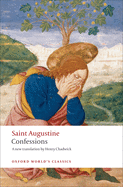
27. Augustine - Confessions

A masterpiece which is best read as doxology first, theology second, and autobiography third. However, the three are obviously and importantly intertwined.


28. Bernd Wannenwetsch - Political Worship

This book bogged down in the middle but I thought that the path laid out in the beginning and the ideals put forward toward the end were some of the most refreshing and appropriate ecclesiology I've read. The chapter on "Consensus and Forgiveness" offers a much needed word for churches obsessed with efficiency and success that they forget their call to the ministry of reconciliation.


29. Elie Wiesel - Night

30. Simon Wiesenthal - The Sunflower

Holocaust reflections that are as pointed and poignant as they are haunting.


31. Rob Bell - Velvet Elvis

It may have been the tone more than the content that caught me up in this one. I had some problems with the book, but was pretty on board with the trajectory. In seminary I did extensive research on Rob Bell's hermeneutic, and so this book and the ensuing study left its trail in my thinking.


32. Clark Pinnock - Most Moved Mover

Many people I respect (and some I don't respect) have long since written off openness theology. I continue to be more intrigued than I am unconvinced, and will usually be the first to defend the view, even while I tweak it accordingly. All that to say, I was deeply invigorated by what Pinnock put forward here, and have yet to put this issue to bed.

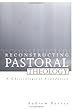
33. Andrew Purves - Reconstructing Pastoral Theology

I said before that I'd tell pastors browsing leadership books to read Nouwen's In the Name of Jesus and then not waste their time on anything else. I forgot to mention this one. I can't wait to read Purves' latest book, because this one cleared the ground excellently for a much-needed, well, reconstruction in pastoral theology.

34. Ravi Zacharias - Cries of the Heart

Though I've not had a lot of tragedy or suffering in my life, theodicy questions have always been front and center on my mind. I appreciate that Ravi Zacharias got me thinking about this early, and got me thinking (and feeling) pretty clearly too.


35. Robert Louis Wilken - The Spirit of Early Christian Thought

A highly readable and inspiring introduction to the theology of the first few centuries of the church. Instilled in me a hunger to read more of the patristics and to trace more avidly the continuities of Christianity.

Monday, March 29, 2010

Of Films & Fiction - No Country for Old Men

This September the length of my annual tip-of-the-hat lists will hit 35. I'm already prepared to add to two lists---films that have stuck with me and favourite fiction---with but one entry: No Country for Old Men. I'll be writing an article on this story in the fall and it will be pretty clear then what I think about it. So for now I'm just going to post a few quotes.

Novel # 27 - No Country for Old Men - Cormac McCarthy

This is a masterfully and thoughtfully written Western thriller. The dialogue and the narrative are swift and simple but drive the reader's heart and mind racing. Gladly, this was one time when seeing the movie did not ruin the novel. In the book you do get more of the Sheriff's reflections, and of Moss's dialogues, and this makes for a very rich read indeed. Here are a few of the lines you don't get in the movie:

[Llewlyn Moss:] There's always somebody knows where you're at. Knows where and why. For the most part.
[Hitchhiker:] Are you talkin about God?
No. I'm talkin about you. . . . .
He looked at her. After a while he said: It's not about knowin where you are. It's about thinkin you got there without takin anything with you. Your notions about startin over. Or anybody's. You don't start over. . . . You might think you can run away and change your name and I don't know what all. Start over. And then one mornin you wake up and look at the ceilin and guess who's layin there?
. . . . . . . . . . . .

[Carla Jean Moss:] You can change it.
[Anton Chigurh:] I don't think so. Even a nonbeliever might find it useful to model himself after God. Very useful, in fact.
. . . . . . . . . . . .

[Sheriff Ed Bell:] The man that shot you died in prison.
[Uncle Ellis:] In Angola, yes.
What would you of done if he'd been released?
I don't know. Nothin. There wouldn't be no point to it. There ain't no point to it. Not to any of it.
I'm kindly surprised to hear you say that.
You wear out Ed Tom. All the time you spend tryin to get back what's been took from you there's more goin out the door. After a while you just try and get a tourniquet on it. . . . I was too young for one war and too old for the next one. But I seen what come out of it. You can be patriotic and still believe that some things cost more than what they're worth. Ask them Gold Star mothers what they paid and what they got for it. You always pay too much. Particularly for promises. There ain't no such thing as a bargain promise.

Film #35 - No Country for Old Men - Joel & Ethan Coen

As far as film-adaptations go, it would be tough to beat what the Coen brothers here managed. The movie and the book are the same kind of awesome in slightly different ways--each perfect according to its medium.

Both begin with Sheriff Ed Tom Bell's by now famous monologue: "The crime you see now, it's hard to even take its measure. It's not that I'm afraid of it. I always knew you had to be willing to die to even do this job. But, I don't want to push my chips forward and go out and meet something I don't understand. A man would have to put his soul at hazard. He'd have to say, 'O.K., I'll be part of this world.'"


I'll be writing an article about No Country for Old Men this fall for the fourth annual Karl Barth Blog Conference. The theme is "Barth in Conversation with . . ." and this is what I pitched. I'm thrilled that they went for it. I'm not going to elaborate on it right now, but basically it will be a Barthian response regarding the nature of evil. But, that said, the feedback is going to go both ways.

I haven't read any full-scale reviews of McCarthy's story or the Coen's film adaptation yet, and will do so when writing time comes, but what I just may put more stock in is the thoughts of my readers. I would really love to have some of your reactions to the book and the film. For those who've read it or seen it: How did it strike you? What did you take away from it, either intellectually or emotionally or both?

Thursday, October 22, 2009

Thirty-Fours

A couple years ago I commemorated my 32nd birthday by producing a list of the 32 most influential films of my life. The next year I added a 33rd and then also produced a list of my top 33 works of fiction. Figured I'd make this an annual tradition. Its good to look back on things, and I don't mind having an excuse to do some lists for my sidebar. This year my 34th has come and gone but don't think I forgot! Here are this year's additions:

Great Fiction: I wrote about this book not too long ago, and won't say much more about it here except that it managed to be gripping and frightening both without really pressing the drama or the thrills too hard. Somehow by this subtlety, however, McCarthy managed to make a page-turner out of what could have been so cliche. Remarkably, this he did while simultaneously making me often scared to turn the page! But the thing that impressed upon me most from this story came simply from the two main characters--by the end something about their journey had made me want to walk my own more resolutely.


Great Films: Truth is, this could have been on the list of "Films I Take With Me" long ago, but I never quite knew what to do with it. I do hesitate to recommend it, simply because I have a pretty wide readership and I don't want anyone walking into this film unaware: The language is about as brutal as you can imagine, and then some. I have hung out in a lot of locker rooms and don't really bat an eye at "swearing" all that much, but there are some scenes in here that I still found hard to take. But that's kind of the point, I'm afraid.

Magnolia depicts reality. It just does. And also something like hope or redemption. I have rarely been moved so deeply and felt so richly about life, death, and everything. I should say more about it than just talk about the language, but if you want to understand this film's influential quality in my life a bit more, a friend of mine talked about it here recently, and I can't put it much better.


In the next while (like before I turn 35) I hope to post my new list for this year. I've been toying with doing this one for a long time but haven't figured out how I'm going to do it exactly. I want to do the soundtrack to my life. But that's a bit of an undertaking. So it'll be a top 34 albums or artists or something like that. We'll see. I'm sure you are holding your breath.

Saturday, March 14, 2009

A Complicated Kindness

Canadian Miriam Toews wrote a phenomenal novel a few years back called A Complicated Kindness which my wife and I finally just read this month. After Life of Pi this is the second hugely remarkable Canadian work of fiction I've read in the last while, and I'm beginning to think I've found a new place to go for good reading---right in my own backyard.

Some of the reviews on the book jacket call it "exquisitely written" and a "masterpiece". I can't disagree. I thought maybe the New Brunswick Reader was exaggerating calling the main character "Canada's answer to Holden Caufield," but now I'm not so sure. If you read Catcher in the Rye you know that's high praise indeed. But it fits. The Philadelphia Inquirer agreed and rightly praised this "wonderful little book because it reminds us of the beauty and meaning in one small moment of one small life."

Nomi Nickel is the novel's protagonist and the whole story is told by her, including all the dialogue, which is often written without quotation marks because it is as if she is in the room telling it to you in one breath from her own lips. The story-telling is not very linear and gives everything from one teenager's perspective, which gives it a unique style that may take a while to get into. But as with Catcher in the Rye the result is that the reader is engrossed in the character's world and really begins to understand.

This novel raises eyebrows on another level since the plot revolves entirely around the life-sapping, stifling strictness of a small prairie Mennonite town. Though the "complicated kindness" of some of the characters does shine through, the indictment on some of our evangelical strains is pretty stark. All the more reason for evangelicals to read it, though, in my opinion. Empathy and self-awareness are good things.

I'm not sure I fully appreciated this novel until I put it down. Though I normally enjoy different writing styles and non-linear story telling (more in movies than books), I wasn't sure I was following the way I was supposed to all the time. My wife would ask where are you in the story? and I'd respond what do you mean where am I, nothing is really happening in real time. (By the way that last sentence was Miriam Toews-esque). But the beauty of it is that over time the picture of what has indeed happened does emerge clearly, and in the meantime you have entered Nomi Nickel's world to such an extent that there will be sadness on losing her.

Here are a couple random excerpts to leave you with a bit of the flavour:

"Lydia was lying on a bed that had two mattresses on it instead of one because just one was too hard for her bones. Its a beautiful day, said the nurse, and a young healthy girl like Lydia should be outside in the fresh air. . . . Lydia opened her eyes and smiled and nodded and then closed them again. The nurse sighed. I would kill her on my way out of the hospital. My friendship with Lids was often about protection. Or it was a shared desperation. Or it was about recognizing the familiar flickering embers of each other's dying souls" (p. 33).

"My dad gazed into the neighbour's yard. Looks like the little girl's got herself a new two-wheeler, he said. We say bicycle now, Dad, I said. Or, sometimes, bike. He . . . took the pant clip off his leg and saluted me before going into the house. I had never seen him salute before. Were we saluting now? Was this some new playful thing we were doing now? God, Ray deserves a better daughter than me. He deserves Laura Ingalls Wilder saluting him back exuberantly, clicking her heels even, and saying oh, Father, and gazing at him the way a daughter should. I took the chalk and wrote in tiny, tiny letters on the driveway: Dad, don't think I'm not saluting you when I'm not saluting you" (p. 73).


I highly recommend this book. I don't know if I've ever done this before but I'm thinking about turning back to the first page again and reading it again right away. I think I'm adding it to my "great fiction" list (on the right sidebar along with another recent add-in, Chesterton's Napoleon of Notting Hill).

Thursday, January 08, 2009

The Kite Runner and Books on Film

The Kite Runner is a classic example of the difficulty of making a book into a movie. For all intents and purposes the adaptation was done very very well. The movie is technically about as true to the book as a person could expect. The story is virtually the same. All the main elements are there. And it is an amazing story.

But where I would give the novel a 9/10 I feel like I'm being generous in giving the movie a 7/10. And it is hard for me to tell if I'd have liked it more if I didn't already love the story or if I'd have liked it less.

When I give a movie a rating of 6 or higher I'm saying I liked it. I think the director and some of the actors did some really great things here. For one thing, we get to see the childhood dialogue in Farsi with subtitles rather than English. In this way the movie is actually an improvement on the book. And some of the actors did a really good job, too.

So what is the problem?

Somehow I was just not as captivated as I expected to be. Maybe this is just the problem of a reader expecting a repeat experience. But I'm not sure that is entirely it. I realize a film is going to be different than a book. You give leeway for that.

In fact, I think this is exactly where the movie failed. It wasn't different enough. It just told the story. Plot and some key lines were the main focus. Descriptions of setting were used to give us the setting, but where in the book the description of the setting also gives the reader the mood, in the movie they just treat it as background.

The movie needed to sit still a little more and let us soak in the setting. We needed a close up or two on some key character's faces (and especially with the child actors we needed to see those faces betray some feeling a bit more). We needed the lighting to look less sitcom-ish from start to finish. It was all just too-well lit. There are some dark moments in this story, but it felt like an after-school special at times.

The strength of The Kite Runner is this incredible window the reader gets into Afghani culture and history, into these particular characters, and into this unfolding drama of friendship, family, betrayal, and redemption. The movie opens that window, but despite the use of Farsi language and the seemingly-authentic setting, the view through that window just is not as vivid or deep as I'd hoped.

When you adapt a book into the film it is not just enough, in my view, to be true to the story. To use another example, The Lion the Witch and the Wardrobe was very true to the original story (with the exception of that horrendous river scene) and yet totally failed to capture the wonder of the story (at least once they left the beaver's hut).

Sure, characters were given about as much background or set-up as in the book, but somehow in the book CS Lewis had brought us to the place where we felt we knew them already once we met them. Centaurs, fawns, dogs, deer, mice, etc. were all on our side fighting against evil. But in the movie, though they enter the story the same way as in the book, we don't care about them. We don't know them. They almost seem like background illustrations.

The film-makers in both of these cases have not gone out of their way to translate mood and character and feeling from the printed page to the screen. You have to communicate these things differently on screen or else you might as well just leave it on the page.

I do recommend The Kite Runner. In fact, I'd like to hear from some who have seen the movie but not read the book. Did it work? Probably to a large degree it did. I mean, I'm still giving it a pretty good rating here. It is a remarkable story, and in many ways it is well told. But you would be better off reading the book. You will feel and be affected by the story far far more.

But in my opinion that is not just because it is a book, but because the novel did a better job of being a book than the movie did of being a film.

Friday, December 19, 2008

Great Fiction

I meant to post this list around my birthday but here it is. I've decided on my favourite fiction reads of all time. If I've written about it before there is a link. All of these books in some way or another provided me a great adventure, a spark of insight, and/or a new lease on life. I've ranked them, of course. It is more fun that way. I hope to add one every year, and perhaps change the list slightly over time, but it will be very hard to dislodge any of the top spots

1. Perelandra - CS Lewis

Mind-blowing science fiction with aesthetic beauty, adventure, and a lot to say.

2. The Lord of the Rings - JRR Tolkein

Epic, of course. Even after seeing the movies there is nothing that compares with the sense of fellowship and fear developed in the book. And the ending of The Two Towers is unmatched.

3. The Man Who Was Thursday: A Nightmare - GK Chesterton

I've said plenty about this book already.Part comedy, part adventure, part spy novel, part absurd, part metaphysical whodunit, part Pilgrim's Regress, and a dash of Dr. Strangelove.

4. To Kill A Mockingbird - Harper Lee

This was the first bit of required reading in school that I remember absolutely digesting and loving. It starts out as an innocent story of a brother and a sister and their neighbourhood friend and stays the same story except for the "innocent" part. Along with them, the reader is re-introduced to the societal evils of slavery, racism, outcasts, mob mentality, neighbourhood gossip, and bad politics. Somehow these are seen most truly through a child's eyes. And yet the story has a hero too. I am not sure there are any more recognizable characters in American fiction than Atticus Finch, Jem, Dell, and Boo Radley. This is a must read and if it weren't for the dang Inklings would be number one on my list perhaps the rest of my life.

5. The Count of Monte Cristo - Alexandre Dumas

Best adventure story ever. Bar none.

6. The Outsiders - Susan Hinton

This story follows the lives of some high school gang members in the 50s in such an empathetic and honest way. I don't know if I looked at people the same again after reading this book. Somehow it showed me that everyone's a person, no matter what. These are the guys I would have been afraid of growing up. But Ponyboy, Sodapop, Dally, Johnny, Cherry and the rest are stripped bare in front of the reader in such an authentic and yet understated fashion that by the end you are deeply saddened by events that you would otherwise brush over in the newspaper.

7. The Brothers Karamazov - Fyodor Dostoevsky

A highly regarded classic novel, and for good reason. I was enraptured by it.

8. The Grapes of Wrath - John Steinbeck

Another all-American great which just shows you the world you live in, and where it has come from.

9. Voyage of the Dawn Treader - CS Lewis

Two CS Lewis books in my top 10? Guess so. This is my favourite of the Chronicles of Narnia, by far. My Dad's favourite too. Can't wait to read it to my boys. My oldest is almost ready.

10. Lord of the Flies - William Golding

Golding's Lord of the Flies is just one of those classic stories that had to be told. There have been many imitators in one way or another but his is the masterpiece. The innocence and peril of Ralph, Piggy and Jack and the boys stranded on this island are writ large, and crumble through the fingers like sand on the beach. Simon is the quintessential Christ-figure, and the startling conclusion just sticks with you for good.

11. Out of the Silent Planet - CS Lewis

Part one of Lewis' science fiction which climaxes at Perelandra, but gets a heck of a kick start here. I love that these stories are basically about Lewis. And Ransom: What a great name!

12. Manalive - GK Chesterton

This is a drastically underrated story, perhaps because it is so quirky and weird. But I've read it a few times now and it never ceases to surprise and inspire me.

13. Life of Pi - Yann Martel

Martel's recent masterpiece debuts on my list after having only read it a couple months ago. Perhaps I'm still a bit caught up in it, but I don't think so. It was that good.

14. Ordinary People - Judith Guest

Even though I saw the movie before reading it, this book still made an impact on me. I read it during a bout of semi-depression and so resonated with the character that I felt like he helped me wade through some deep waters. Besides that, I think this is just a very well told character novel which provides a window into the mind and soul of a young person dealing with death, divorce, guilt, family dynamic, friendship, and the struggle for a sense of peace and identity. This is one of those examples of where the story says it better than any psychology text or book review ever could. You just have to read the story.

15. Misery - Stephen King

Just plain-old freaked me out of my skin. And it did so without poltergeists or bloody zombies or any cheap horror-flick tricks like that.

16. The Trial - Franz Kafka

Kafka's The Trial is at the forefront of the genre of literature of the absurd. In this novel Joseph K. runs up against the unrelenting craziness of everyone and everything around him and, though he tries to keep his head, simply can not stay sane. Though Kafka could probably have used a few moments release from his crippling doubt and despair, he has offered us all a reality check through his writing that we'd be silly to ignore, especially in a time when it is just so easy to escape into our sheltered and foolish optimisms. But I digress. This novel is a wild and even frustrating read, but it is so in a fantastic way. The parable of the gatekeeper and the encounter with the priest are two very memorable moments in this adventure in absurdity.

17. The Great Divorce - CS Lewis

More great stuff from Lewis. Of all the attempts this is the best and most artful peak into heaven that has been written.

18. The Kite Runner - Khaled Hosseini

An insight into war-torn Afghanistan through the eyes of one its more fortunate children. The dynamic between this boy and his friend is an enjoyable read on its own, but then when tragedy strikes and the reader follows one character into the ramifications of the rest of his life and the search for redemption the novel takes on a timeless quality and is nearly impossible to put down. Through this book I felt like I experienced another culture and found some common ground in the world, but also came to appreciate the many things which still tear apart at us.

19. The Power and the Glory - Graham Greene

It took me awhile to get into this book, and I'm not sure if that's a flaw with the book or just the circumstances of my reading it. But once it got going this story of a traveling priest on the lam in the villages of rural Mexico took on a life of its own. This is another story of an outcast, told from the inside, and the things he encounters and the attitude he maintains really cut to the quick. He is not idealized but is vilified throughout the novel (by no one more than himself)---and yet he is a heroic figure. There is a lot going on in this story and I look forward to someday giving it a second read. Graham Greene is a masterful story teller.

20. The Magician's Nephew - CS Lewis

My second favourite of the Narnia Chronicles. Should have known the movies were doomed when the started with Wardrobe rather than this one. As a youngster the creation scene and the flying horse and the apples and the rings just blew me away.

21. Revelation - Flannery O'Connor

This is actually a short story about a woman in a waiting room at the doctor's office which ends with her having an epiphany in a pig barn. Sounds unremarkable except for the changes wrought on the character, the stereotypes it exposes, the finger it points at the reader, and the messy kind of redemption it portrays.

22. Fever Pitch - Nick Hornby

Anyone who is a sports fan or who knows and doesn't understand a sports fan needs to read this book. Not only does it explain the inner life of the die-hard fan but it is a really fun read as well. Through it we get to experience the thrill of victory, the devastation of defeat, the obsession over players, the emotional investment of getting wrapped up in a team's history, and both the the fall-out and the inspiration that all of this has in a person's life. Beyond this, the story is also a great experience of modern London and a wonderful journey through the life of an average young English boy.

23. The Idiot - Fyodor Dostoevsky

The idiot is the novel's Christ figure. Enough said.

24. Frankenstein - Mary Shelley

Picturing Boris Karloff with bolts in his neck I was not prepared for the literary genius of this novel. I also thought it would be more frightening than it was. Instead it was a gripping tale of a Doctor's turmoil and a new creature's struggle to find his way in the world. There are a lot of ramifications that could be explored here and it would be awesome to read this one in a book club. Reading it is like peeling away layers of an onion, not only in depth of theme but in narrative as well. It is a story within a story within a story within a story. Really awesome book.

25. The Hobbit - JRR Tolkein

Just wonderful.

26. The Horse and His Boy - CS Lewis

For some reason I can still feel my eyes widening as I imagine my Mom reading this to me at my bedside many moons ago.

27. And Then There Were None - Agatha Christie

I'm a sucker for a whodunit and I'm not sure anyone has ever bested Christie at the genre. I love the idea of a bunch of people stuck in a house having to figure something out. This is a classic.

28. Nightfall - Isaac Asimov

A planet with six suns is preparing for its first nightfall in 2000 years. From what they can tell things did not go so well for society the last time. Will anyone survive the chaos of darkness in a place where it has never been known? (I should write the book jacket shouldn't I?)

29. Crime and Punishment - Fyodor Dostoevsky

This is a pretty troubling story of a young man, his temptation, and his guilt. Maybe not everyone's idea of beach reading, but really worthwhile. Dostoevsky is an absolute master at developing a character and a story through dialogue, and at getting us to recognize our own thoughts and attitudes in those character's minds.

30. The Son of Laughter - Fredrick Buechner

Buechner gives us the biblical story of Jacob in a not-quite-irreverent but certainly-not-glossy way. Through it we learn also of Isaac and his troubled past, covered by laughter. We read of the God known at first as "The Fear" and we get to see the patriarchs as people like us. Really a splendid piece of work.

31. The Catcher in the Rye - JD Salinger

When I was reading this I was a pastor at the time and a piece of mail came to the church asking us to help get this book banned in school. I was a bit torn. I don't think it is a book for kids, but thought the point of the book was kind of being lost. Some rough language in it, but it has the same sort of effect as The Outsiders. Maybe I'm a sucker for these empathy raisers, but I love a story that doesn't necessarily deny the stereotype entirely but does cut through it and lets me see people where I might not have before.

32. The Poisonwood Bible - Barbara Kingsolver

Colonialism in Africa, well told in a unique fashion through the eyes of four young American missionary girls.

33. A Good Man is Hard to Find - Flannery O'Connor

Another of Flannery's short stories which leaves you dead in your tracks. No reader emerges unscathed by her gracious sword.

Blogroll